
Could pervert glasses accelerate the cognitive decline of one’s digital dementia? They certainly increase the risk of being scammed by quishing. You’ll never look at QR codes again in the same way! The glasses would come in handy though if you wanted to elicit some attention from your followers on socials. Just live stream some video while out and about and caption with a sad, cryptic vaguepost. Maybe you could do this from a tiny forest if your community has one.
pervert glasses
Pervert glasses, camera glasses, smart glasses – whatever you want to call them – nary a pair to be found in stock anywhere! For all of the concerns about non-consensual recording, AI facial recognition, child safety, etc., it turns out that enough people want them. Like so many other things, it’s not the product or technology that is inherently good or evil, but rather, how people choose to use it.
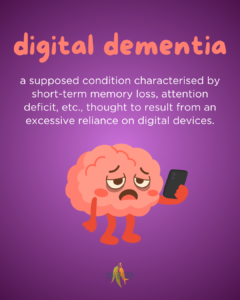
digital dementia
Digital dementia is not a clinical diagnosis or medical condition in any of the diagnostic manuals used by health professionals but the term is definitely gaining traction. Thought to result from an excessive reliance on digital devices and artificial intelligence, the supposed condition is characterised by short-term memory loss, attention deficit and impaired decision-making.
quishing
While quishing is a neat portmanteau of QR code and phishing, another way to scam is the last thing we need. Scammers are now embedding malicious links in QR codes and physically placing stickers over genuine QR codes on parking meters, menus, etc., and sending digitally via email, text and on socials.
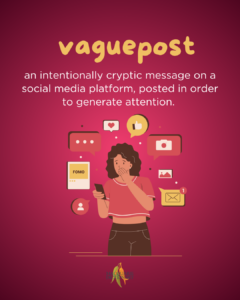
vaguepost
If you’re on socials, you no doubt would have come across such a post. As to whether you engage with them or not is a different matter. The purpose of a vaguepost is to elicit responses from others. An intentionally cryptic message is posted in order to generate
attention. ‘It’s been the worst day ever ...’
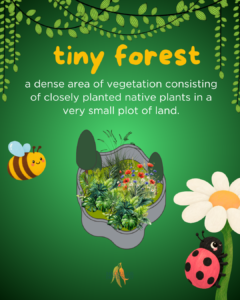
tiny forest
Tiny forests follow the trend of tiny houses where the most is made of something within a small space. Originally conceived by Japanese botanist Akira Miyawaki in the 1970s, they are also known as Miyawaki forests and pocket forests. Often the size of a tennis court, they boost local biodiversity with dense areas of vegetation consisting of closely planted native plants.